USCG PSC Inspection Checklist: How Shipowners Can Prepare for U.S. Port State Control

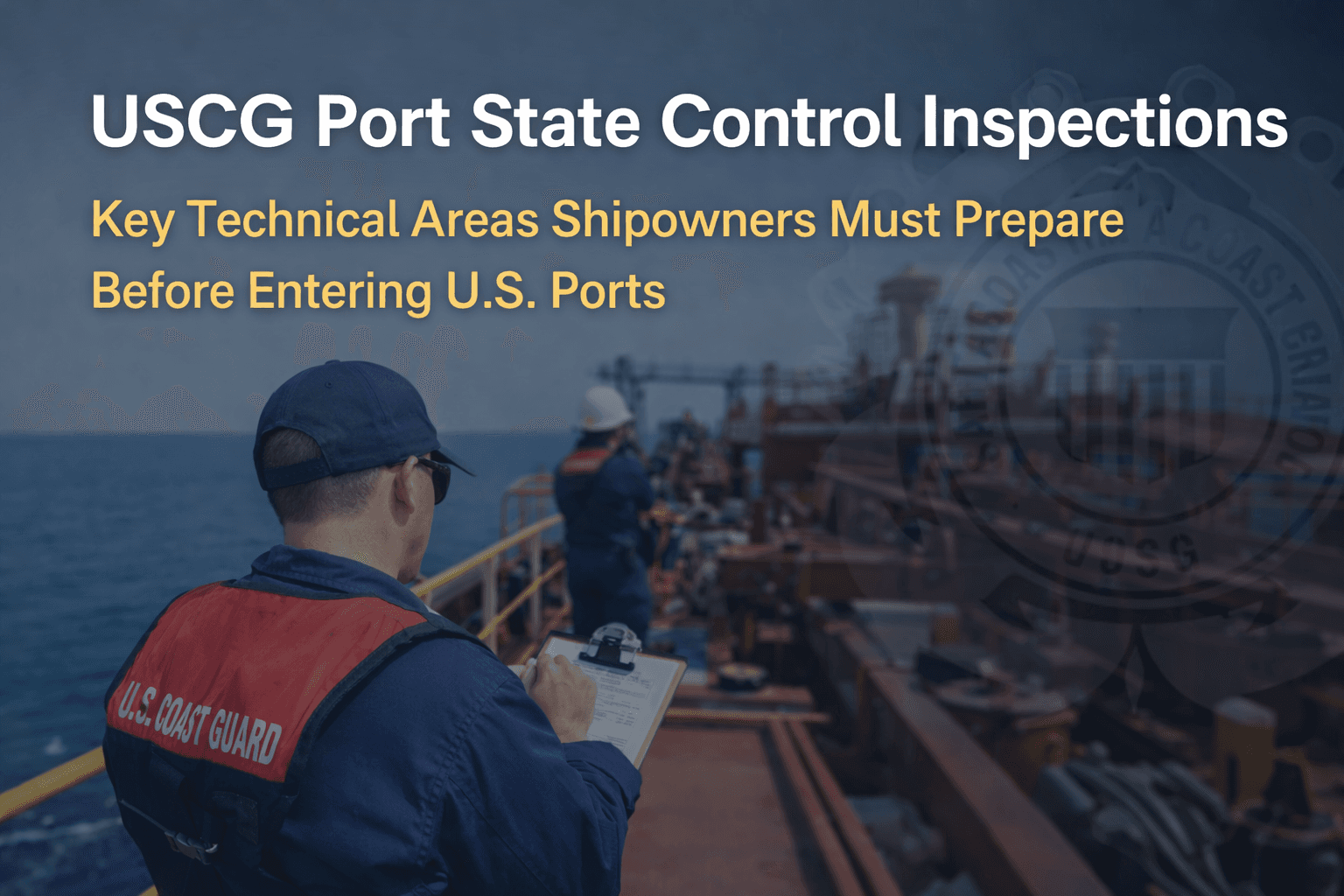
Port State Control (PSC) inspections remain one of the most critical regulatory checkpoints in international shipping. While the regulatory framework is globally aligned with international conventions such as SOLAS and MARPOL, enforcement practices may differ significantly between regions.
One of the most rigorous inspection regimes is carried out by the U.S. Port State Control program, administered by the United States Coast Guard (USCG).
Each year thousands of foreign vessels calling U.S. ports undergo safety examinations under this program. In 2024 alone, more than 8,700 SOLAS safety examinations were conducted, resulting in 82 vessel detentions, highlighting the importance of strict compliance before entering U.S. waters (1).
For shipowners and technical managers, understanding how USCG inspections differ from inspections in Europe or Asia is essential to avoid operational delays, detention risks, and operational disruptions.
Why USCG PSC Inspections Are Operationally DifferentAlthough PSC inspections worldwide enforce the same international conventions, including SOLAS and MARPOL, the inspection philosophy of the United States Coast Guard tends to be more operational and performance based.
Typical inspection focus areas include:
- Operational readiness of safety equipment
- Pollution prevention systems
- Crew familiarity with Safety Management Systems (SMS)
- Fire protection systems and emergency equipment
- Documentation accuracy and operational consistency
The objective of Port State Control authorities is to identify substandard vessels that may pose safety or environmental risks and ensure corrective measures are implemented promptly (2).
As a result, vessels that appear compliant on paper may still face deficiencies if equipment functionality or crew knowledge does not match operational requirements.
Most Common Deficiencies Identified During PSC InspectionsIndustry reports consistently show that a limited number of technical areas account for a significant percentage of deficiencies detected during PSC inspections.
1. Fire Safety SystemsFire safety deficiencies remain one of the most common categories identified during PSC inspections.
Typical issues include:
- Fire dampers not closing properly
- Oil accumulation in machinery spaces
- Fire detection or alarm system malfunctions
Fire safety deficiencies are frequently linked to vessel detentions during inspections (3).
2. Lifesaving Appliances (LSA)Operational readiness of lifesaving appliances is another critical inspection area.
Common findings include:
- Lifeboat engine starting failures
- Launching arrangements malfunction
- Incomplete instructions within lifeboats
- Inoperative release mechanisms
PSC inspectors often require functional testing of lifeboat engines and launching systems, rather than relying solely on visual checks (4).
3. Safety Management System (ISM Code)ISM related deficiencies remain consistently among the most frequent PSC findings worldwide.
Typical examples include:
- Safety Management System procedures not aligned with onboard practices
- Crew members unfamiliar with emergency procedures
- Incomplete documentation or records
Such deficiencies may indicate broader organizational or operational gaps.
4. Emergency Systems and Power SupplyEmergency preparedness remains a major inspection priority.
Common deficiencies include:
- Emergency generator failure
- Emergency lighting malfunction
- Faulty alarm or monitoring systems
Emergency equipment must demonstrate full operational capability during inspections.
5. Environmental Compliance and Pollution PreventionEnvironmental compliance continues to receive increasing attention during PSC inspections.
Inspection areas frequently include:
- Oil filtering equipment (OWS) performance
- Oil Record Book accuracy
- Engine room bilge arrangements
- Ballast Water Management documentation and reporting
Recent inspection trends also show increasing scrutiny on ballast water management systems and associated documentation (5).
Technical Readiness Before Entering U.S. PortsFor vessels planning port calls in the United States, preparation should begin well before arrival.
Recommended preparation actions include:
Technical System Readiness- Verification of fire safety equipment
- Functional testing of emergency systems
- Inspection of lifesaving appliances
- Verification of pollution prevention equipment
- Review of Safety Management System documentation
- Oil Record Book and ballast water record verification
- Maintenance logs and inspection records review
- Familiarity with emergency procedures
- Knowledge of onboard SMS routines
- Understanding of PSC inspection procedures
Proactive preparation significantly reduces the likelihood of operational disruptions and helps ensure smooth port operations.
ConclusionPort State Control inspections are becoming increasingly rigorous as regulators continue to emphasize safety, environmental protection, and operational integrity.
While international maritime regulations remain globally harmonized, enforcement practices particularly in the United States emphasize operational performance and practical compliance.
For shipowners and technical managers, treating PSC readiness as a continuous operational process rather than a last-minute exercise remains the most effective approach.
By ensuring equipment functionality, crew awareness, and documentation consistency, operators can significantly reduce detention risks and maintain efficient port operations.
Sources and Regulatory References(1) United States Coast Guard. Port State Control Annual Report 2024. U.S. Department of Homeland Security, 2025.
(2) International Maritime Organization (IMO). Port State Control – Maritime Safety Framework. London: IMO.
(3) International Institute of Marine Surveying (IIMS). USCG PSC Deficiency Analysis Report, 2024.
(4) Safety4Sea. Lifesaving Appliances and PSC Inspection Findings, 2024.
(5) NAPA Ltd. Ballast Water Compliance Under PSC Inspections, 2025.